
Tattva NewsTattva News
  • Telegu states
  • Regional
  • National
  • International
  • Economy
  • Others
  • Special Stories
  • Opinion
Weather Report
Facebook Twitter Instagram
Trending
  • Dr Bhagwat slams regulatory rigidity in education
  • Indian EV market to touch Rs. 20 lakh crore by 2030
  • Pragjyotishpur LitFest ’24 concludes with a high note
  •  Former Haryana CM, INLD chief Om Prakash Chautala passes away
  • Parliament adjourns sine die amid protests by Opposition and treasury benches
  • Opposition notice for no-confidence against Dhankhar rajected
  • PM Modi lists out ‘sins’ of Congress towards Ambedkar
  • Globally a record number of journalists killed in 2024: India loses 4 scribes
Facebook Twitter Instagram Pinterest
Sunday, February 15
Click for the latest Hyderabad weather forecast.
Telugu
Tattva NewsTattva News
  • Telegu states
  • Regional
  • National
  • International
  • Economy
  • Others
  • Special Stories
  • Opinion
Tattva NewsTattva News
Telugu
Home » India is identifying and defining forests wrongly, says experts
Others

India is identifying and defining forests wrongly, says experts

Editor's Desk, Tattva NewsBy Editor's Desk, Tattva NewsMarch 4, 2022Updated:March 4, 2022No Comments3 Mins Read
Facebook Twitter Pinterest LinkedIn Tumblr Email
Share
Facebook Twitter LinkedIn Pinterest Email

 “While the India State of Forest Report (ISFR 2021) says forest cover has increased, a study of the Forest Survey of India maps shows otherwise,” says M D Madhusudan, Obaid Siddiqi Chair in the History and Culture of Science at the National Centre for Biological Sciences, Bengaluru.

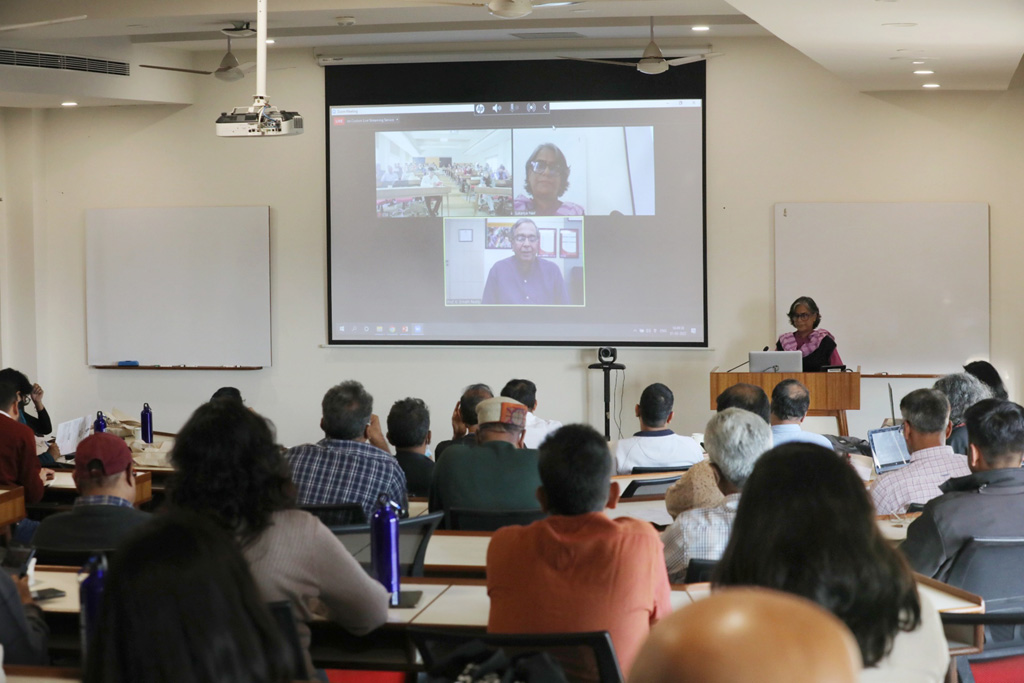
Madhusudan was speaking at Centre for Science and Environment’s (CSE) four-day national conclave, the Anil Agarwal Dialogue 2022, which was inaugurated by Union environment minister Bhupender Yadav on March 1, 2022.

 Narain’s assessment was focused on investigating why the India State of Forest Report 2021 does not explain what is happening to this huge tract of forest land – equal in size to the state of Uttar Pradesh. According to her: “There are states where over 30-50 per cent of the land classified as forests is ‘missing’ from the government’s assessment. Madhya Pradesh, for instance, has ‘lost’ nearly three million ha. This is the real story of forest loss in our country – and it should worry us enormously.” 

 Madhusudan, in his address at the AAD session, felt this was a question of erroneous identification, categorisation and definition. He says: “Tea estates, coconut plantations and housing colonies in cities have been classified as forests — even desert areas have been classified as open forests. There are no technical constraints in classifying forests – we have the technical capacity to differentiate between different kinds of forests and plantations. I believe it has been an active choice to call coconuts and tea plantations forests.”

 He elaborates further: “In 2001, efforts were made to ensure accuracy of data, but the opposite happened – due to the definition used, forest cover was shown to rise steeply, while there was no change or negative change in the forest cover on the ground!”

 According to Madhusudan, “if you cut down a forest and grow tea, it can’t be called deforestation anymore because it was forest earlier and is forest later. We have lost the vocabulary to describe this change – this is why it is essential that these categories be differentiated.”

 Narain adds: “The definition of ‘forest area’ outside recorded forests includes non-forest plantations. As the definition of a forest includes any hectare of land with a tree cover of 10 per cent or more, these areas would include plantations of all kinds, ranging from coconut to even tea. In fact, between the assessment 2019 and 2021, India’s forest cover has grown by a mere 0.2 per cent, and most of this ‘growth’ has been in ‘open forests’ (with canopy cover of 10-40 per cent), on lands outside recorded forest areas.” 

 She says that“the urgent agenda today is to reinvent forest management for the future; so that we build a wood-based future, but still protect the ecologically fragile areas.” 

CSE foreists ISFR 2021 MD Madhusudan Sunit Narain
Share. Facebook Twitter Pinterest LinkedIn Tumblr Email
Editor's Desk, Tattva News

Related Posts

Reusing treated wastewater offers an opportunity to ease India’s water crisis, says CSE

December 17, 2024

Protests erupt in Kolkata after CBI fails to frame charges against ex-RG Kar principal

December 15, 2024

India leads globally in AI upskilling

December 6, 2024

Countries of the developed world perform ‘the great escape’ at COP 29, slams CSE

November 29, 2024

India successfully tests nuclear-capable 3,500 km range ballistic missile 

November 28, 2024

FIR against SP MP Barq, MLA Mehmood’s son

November 26, 2024

Leave A Reply Cancel Reply

FOLLOW US
  • Facebook
  • Twitter
  • Instagram
  • YouTube
  • LinkedIn
REGIONAL

‘Samatar Chandere Jivanar Joigaan’ to pay homage to Ambedkar

December 6, 2024

PPFA offers thanks to Delhi, Dispur for classical recognition to Asomiya

October 12, 2024

Yogi slams Congress prince heading to become anti-India separatist group leader

September 12, 2024

Rajasthan CM  gets threat call from Dausa jail

July 29, 2024
NATIONAL

Dr Bhagwat slams regulatory rigidity in education

December 21, 2024

 Former Haryana CM, INLD chief Om Prakash Chautala passes away

December 20, 2024

Parliament adjourns sine die amid protests by Opposition and treasury benches

December 20, 2024

Opposition notice for no-confidence against Dhankhar rajected

December 20, 2024
Tattva News
Facebook Twitter Instagram Pinterest LinkedIn
  • Telegu State
  • Regional
  • National
  • International
  • Economy
  • Others
  • Special Stories
  • Opinion
  • Contact Us
© 2026 Tattva Talks Designed by Dhanush Infotech .

Type above and press Enter to search. Press Esc to cancel.