



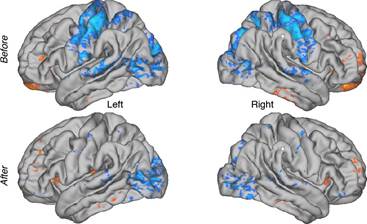
Researchers have found that consistent meditation modifies the connectivity between relay channels that takes in data from the sensory world to the cerebral cortex of the brain. It allows a person to easily transition into a state of deep meditation, making it easier to meditate. Meditation has been a mainstay in Indian traditions for ages.
However, the scientific understanding of the different states of yoga has been limited. A number of EEG studies have found that a deep stage of meditation results in an increase in theta and delta waves in the brain. These waves are caused during a relaxed stage but not in sleeping stage.
A new study supported by the SATYAM programme of the Department of Science and Technology (DST) suggests that consistent practice reduces thalamocortical connection with the sensory regions of the brain. The findings were presented at the Annual Meeting of the International Society for Magnetic Resonance.
The team consisting of Vaibhav Tripathi, Anju Dhawan, Vidur Mahajan, and Rahul Gargrecorded brain activity with the help of MRI of expert meditators and also those who do not regularly practice meditation before, during, and after meditation.
