



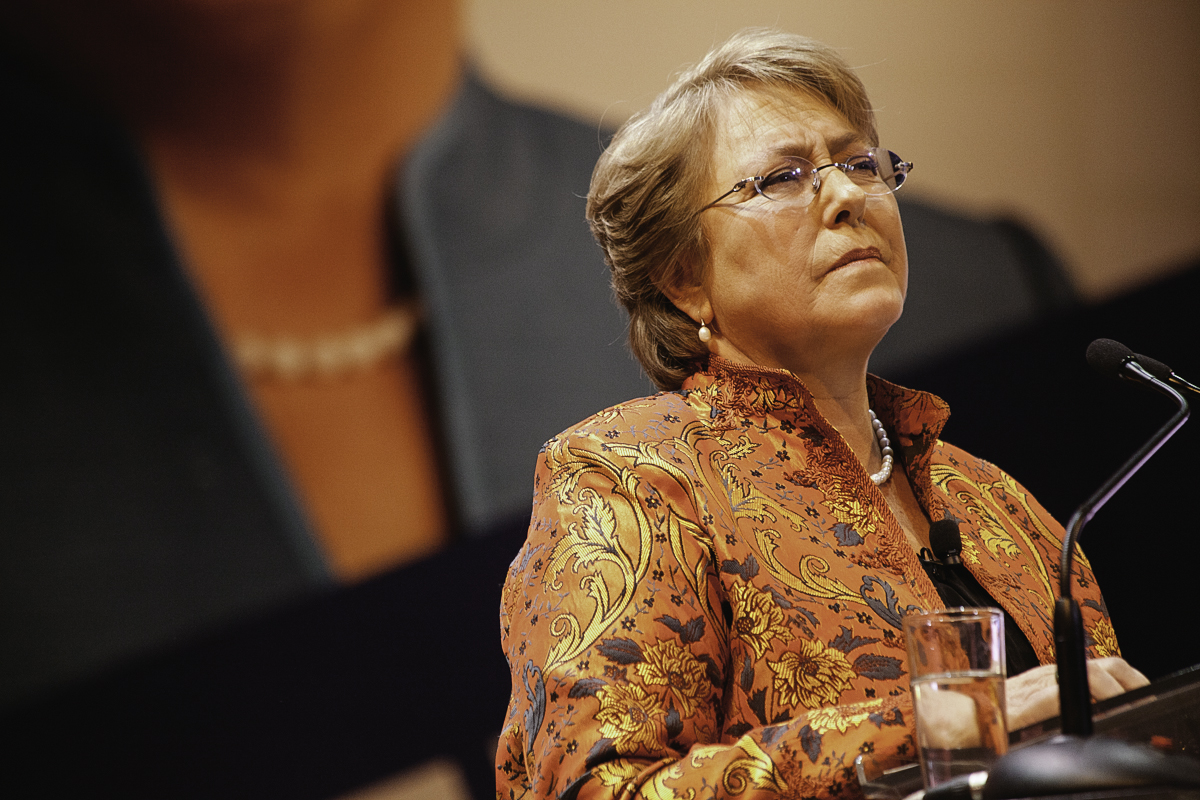
Several rights bodies have expressed severe concern over the UN High Commissioner for Human Rights Michelle Bachelet announcement on March 8 stating that she has secured a visit to China `foreseen to take play in May’. Their main objection is that her announcement did not include any mention of the expected release of the Office of the UN High Commissioner for Human Rights (OHCHR) report on serious human rights violations in Xinjiang, the Uyghur region.
In September 2021, they recalled that ‘regret[ting] not be[ing] able to report progress’ on negotiations for access, Bachelet had confirmed that her Office was ‘finalising its assessment of the available information on allegations of serious human rights violations in [Xinjiang], with a view to making it public.’ Again, in December, they said that a spokesperson for OHCHR stated the report would be released ‘in a matter of a few weeks.
The signatures on this statement include Amnesty International, Asia Democracy Network, Chinese Human Rights Defenders, FIDH – International Federation for Human Rights, Freedom House, Front Line Defenders, Human Rights in China, Human Rights Watch, Human Rights Without Frontiers, International Campaign for Tibet and World Uyghur Congress
They said that her announcement in an update to the UN Human Rights Council comes three and a half years after she publicly requested unrestricted access to China for the first time. Over this period, they deplored that she did not take adequate public diplomacy steps, including official statements, to respond to allegations of serious rights violations in the country in a timely manner.
In contrast, they said that nongovernmental organisations, UN Special Proceduresand Treaty Bodies have collected a diverse and extensive body of information detailing grave human rights violations that could amount to crimes against humanity, or even genocide.
In June 2020, they referred that 50 Special Procedures experts called ‘decisive measures to protect fundamental freedoms in China’, including the establishment by the Human Rights Council of ‘an impartial and independent United Nations mechanisms to closely monitor, analyse and report annually on the human rights situation in China.’
They expressed regret over the perceived lack of coherence in the High Commissioner’s approach to addressing the human rights crisis in China, which poses a risk to the credibility of the OHCHR, and its perceived ability to tackle serious allegations against a major power.
They also concerned that the High Commissioner has remained silent on the human rights crisis in Tibet, in contrast with her predecessors. They said that China is, alongside Saudi Arabia, the country most often mentioned in the UN Secretary-General’s annual report on ‘reprisals’ against individuals and groups cooperating, or seeking to cooperate with the UN.
For example, they said that in the 2020 report, China was listed among the 11 countries cited for engaging in ‘patterns of reprisals’, and later identified as one of five countries with ‘serious issues with the detention of victims of reprisals and intimidation.’
They demanded to releasethe OHCHR report on serious human rights violations in Xinjiang, the Uyghur region, promptly and ahead of her visit to China, and brief the Human Rights Council on its contents, as a matter of urgency.
