



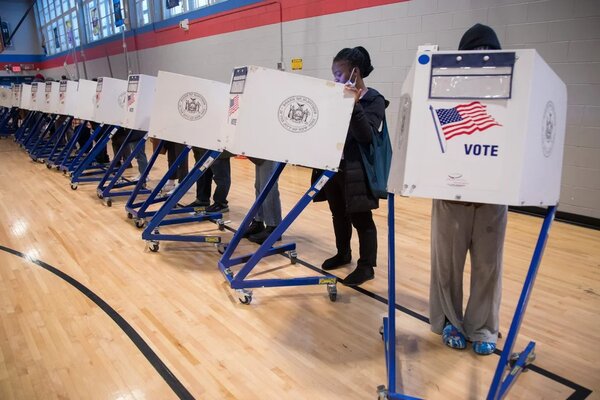
Last week, voters in five American states were balloted on wording in their constitutions that permits slavery as a punishment for crime. Tennessee, Alabama, Vermont and Oregon voters chose to fully abolish legal slavery in all forms in their jurisdictions.
The punishment or exception clause in the Thirteenth Amendment of the U.S. Constitution states, “Neither slavery nor involuntary servitude, except as a punishment for crime whereof the party shall have been duly convicted, shall exist within the United States, or any place subject to their jurisdiction.”
These 14 words have provided for a legal form of slavery in the U.S. since the Thirteenth Amendment’s ratification in 1865. Of the five states, four used their ballots to rid themselves of this archaic language and practice. Tennessee, Alabama, Vermont and Oregon now no longer allow slavery in any form in their jurisdictions. Louisiana was the only state to reject the amendment.
But even there, where more than 790,000 voters decided to keep the constitutional language, over 508,000 voters wanted to change it. This means that Louisiana’s campaign had massive support even though the ballot measure was reportedly confusing to abolition supporters and even though the amendment’s original sponsor ended up asking persons to vote no.
What this indicates is that a similar effort in the future has a good chance at passing in Louisiana – and in other states. In Vermont, Alabama and Tennessee, the measures passed by landslides with support across notoriously divisive party lines. In Oregon, there was a closer race but even the opposition, largely law enforcement, stated they did not support slavery “in any form.”
Together with partners, the Freedom United community is demanding all states and the federal government to explicitly outlaw slavery and involuntary servitude as punishment for a crime in the U.S. and state constitutions.
