



Slawomir Sierakowski,
Former NED Reagan-Fascell fellow
For civil society, the cause of Ukraine should be no less vital than the defense of the Prague Spring of 1968 against Soviet invasion, observers suggest.
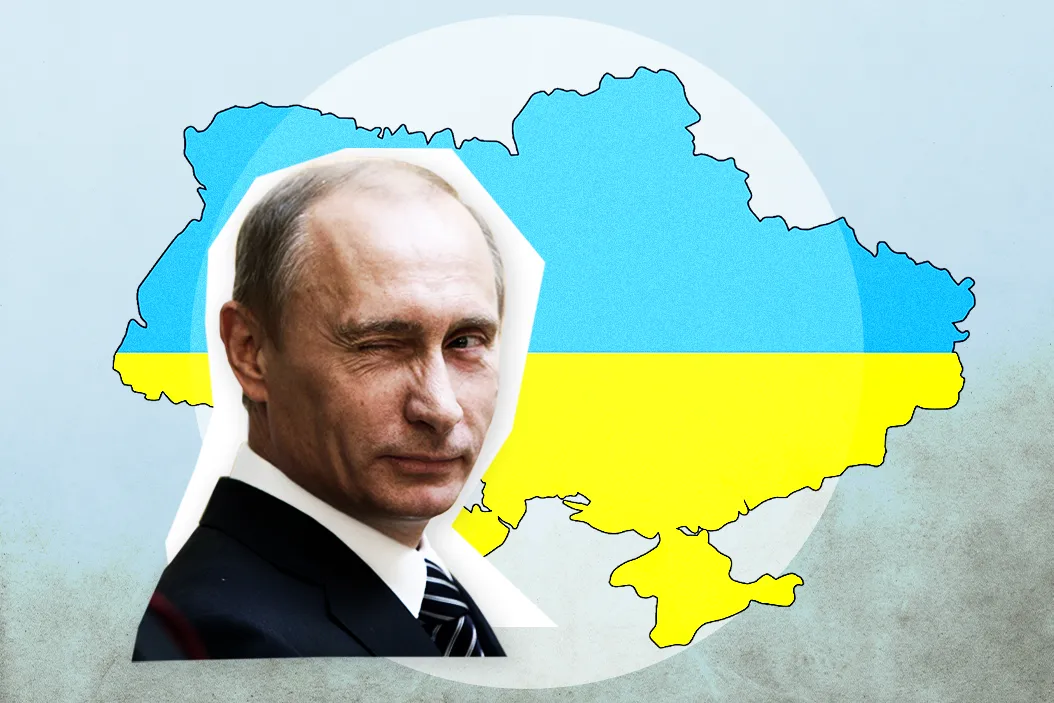
Putin must attack Ukraine because he will lose face if he doesn’t, says Slawomir Sierakowski, founder of the Krytyka Polityczna movement, and a senior fellow at the German Council on Foreign Relations. Now in the last phase of his long reign, he has concluded that his legacy will suffer an irreparable blow if he does not leave with Ukraine in Russia’s firm grasp, he writes for Project Syndicate.
Ukrainians do not want democracy because they are being “subverted” by the West, as Russia claims, but because it paves the way from an imperial Russian borderland to a sovereign statehood, argues the University of Sydney’s Olga Boichak:
In the face of such an existential threat, Ukraine has experienced profound social, political and cultural transformations. Over the past eight years of occupation, hundreds of grassroots volunteer initiatives have stepped up to help the country recover from the humanitarian crisis stemming from the long-running conflict and counteract a full-scale military invasion.
This type of civil society activism is the cornerstone of democracies around the world, Boichak observes. There is still a long way to go in Ukraine, but these emerging foundations can now be observed in nearly every aspect of public life.
Putin is the key decision-maker in Russian foreign policy. However, his decisions are influenced by two factors, adds Lilia Shevtsova, author of Putin’s Russia and member of the Liberal Mission Foundation, Moscow:
- First, Russia’s personalized power system requires an enemy, in order to consolidate society behind the leader.
- The second factor is the crisis and demoralization of the West, which invites Moscow to flex its muscles.
“The current emphasis on Russian cost, whether from the deployment of military forces or potential costs from sanctions, downplays the importance of ideology and domestic politics in Russia,” said Dennis A. Velazco Smith, co-director of the Project on International Peace and Security at William & Mary’s Global Research Institute.
“Vladimir Putin is a Russian nationalist,” he told Newsweek, a description that also applies to the president’s base in the military, intelligence services and internal security services.
“He and they fear and resent the West’s growing influence in Eastern Europe, which in their view looks like a form of Russian containment. Even worse, growing Western political and economic influence could potentially threaten the regime in Moscow, bringing back the chaos of the [Boris] Yeltsin years,” Smith adds. “Given that threat, I doubt that Putin will be too heavily influenced by the cost of a large military deployment.”
Communist, nationalist, Islamist and other authoritarian regimes often learn from and support one another not because they share an ideology, says Uriel Epshtein, the executive director of the Renew Democracy Initiative. But because, in an inversion of the famous Martin Luther King Jr. quotation, the existence of freedom anywhere poses a threat to tyranny everywhere, he writes for NBC News.
That’s why democracies like Britain need to take the ideological offensive in refuting the atavistic myths promulgated by the Putin regime, The (London) Times reports, as UK defense secretary Ben Wallace argued last month.
To win ideologically, we need success in Ukraine – to defend our allies, NATO, Western security and the rule of law, and to lead democracies by standing up for them, argues Molly McKew, lead writer at greatpower.us.
The Western response will be the same regardless of whether there is a small-scale war or a large-scale one, says former Reagan-Fascell fellow Sierakowski. Either way, another Russian attack on Ukraine would destroy the entire post-Cold War settlement in Europe. Large-scale wars and occupations would again become the norm. The West finally seems to have realized that it cannot allow this.
For me as a Russian, the most surprising thing is that the West is surprised by every Kremlin gambit when Putin’s litany of grievances was a clear sign of what was coming years ago, Journal of Democracy contributor Shevtsova (left) tells POLITICO. What we still do not know is how Russia will resolve its cognitive dissonance — 80 percent of respondents to recent polls want to normalize relations with the West, but 50 percent blame the U.S and NATO for the confrontation between Russia and Ukraine.
The Russo-Ukrainian conflict is essentially irresolvable for two reasons, analyst Mykola Riabchuk, author of Glechschaltung. Authoritarian Consolidation in Ukraine, 2010-2012, tells IEA de PARIS (above):
1) Russia is stuck in the imperial vision of its history, geography, and identity that leaves Ukraine neither any space in the past nor any legitimacy at present
2) Moscow pursues a revisionist policy aimed at carving up Europe for allegedly “legitimate” spheres of influence. All this is perceived in Ukraine as an existential threat to both its identity and sovereignty, and pushes the country further away from its neighbor.
All the attempts in the past two decades to engage Russia in a meaningful dialogue and cooperation having failed, it is time for the West to recognize the rogue nature of the current Kremlin regime and to focus on its containment rather than engagement, he adds. The Russian elite, unlike its Iranian or North Korean counterpart, is deeply integrated into the West and should therefore be very vulnerable to coherent and comprehensive personal sanctions.
The significant military buildup on Ukraine’s border is part of a larger coordinated geopolitical offensive called “reflexive control,” which involves a wide variety of hybrid warfare tactics, such as deception, distraction, deterrence and provocation, the University of Sydney’s Boichak adds:
We’ve seen these tactics playing out in the rising number of cyber attacks on Ukraine’s government servers and energy grid, to the Russian state-sponsored disinformation campaigns …Reflexive control also involves the potential for so-called false-flag operations – terrorist acts allegedly committed by Ukraine on Russian territory or involving Russian citizens. RTWT
(Courtesy: National Endowment for Democracy’s Democracy Digest)

4 Comments
https://www.philadelphia.edu.jo/library/directors-message-library
Thank you so much for ding the impressive job here, everyone will surely like your post.
I feel really happy to have seen your webpage and look forward to so many more entertaining times reading here. Thanks once more for all the details.
I will be interested in more similar topics. i see you got really very useful topics , i will be always checking your blog thanks