



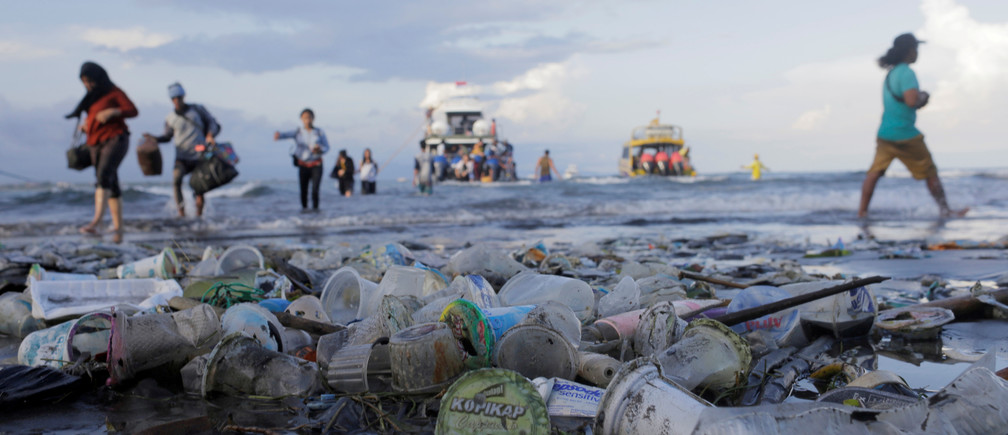
The world is experiencing multiple crises caused by humans—pollution, climate change and biodiversity loss, to name a few. Initiatives such as Plastic Free July help remind us that we are each part of the solution.
Despite campaigns to raise awareness of the epic scale of plastic permeating soils, seas and our very own bodies, plastic waste has increased exponentially over the past 20 years. According to the OECD, global plastic waste more than doubled from 2000 to 2019, reaching 353 million tonnes. The 2019 edition of the “Plastic Atlas” estimates that since 2000, more plastic has been produced than in the 50 years before. Only 14–18% of plastic waste is recycled globally and, according to different sources, an average of8 – 10 million tonnes of plastic enters the ocean each year.
The impacts of plastic pollution are recognised widely and people want change. According to Back to Blue —an initiative by Economist Impact and the Nippon Foundation—60% of people cite tackling plastic pollution as the top priority for restoring ocean health, ahead of dealing with chemical pollution and addressing climate change. What people might not know is that plastic and chemical pollution are two sides of the same toxic coin.
The joint Secretariat of the Basel, Rotterdam and Stockholm Conventions of the United Nations (BRS) works to “make visible the invisible” by drawing attention to the prevalence of all types of chemical pollution. The hope is that by shining a light on the toxic chemicals found in ecosystems—including the human body—its unique global framework for governments and stakeholders will inspire urgent action.
Rolph Payet, executive secretary of the BRS, explains how plastic and chemical waste are intersecting threats: “Plastics pick up pollutants—including Persistent Organic Pollutants (POPs)—and can transport them vast distances on ocean currents. That is one reason POPs have been found in the deepest parts of the ocean and at the polar extremes, far from any POP sources.”
The chemicals that cling to plastic can easily end up in humans. Microplastics have been found in the blood, lungs and guts of human beings and probably enter our bodies through the food and water we consume. The health impacts of microplastics present within us, let alone the chemicals they carry, are not yet understood.
The BRS Conventions made a landmark decision in adopting the Plastic Waste Amendments. These amendments bind all parties to the Basel Convention, ensuring that plastic waste is shipped only to countries that have facilities to manage it in a way that doesn’t cause human and environmental harm.
Mr Payet explains that, as the only globally legally binding instrument that exists to address excess plastic, the Basel Convention is now at the forefront in promoting the prevention, environmentally sound management and control of transboundary movements of plastic waste.
The Basel Convention may soon have another legally binding instrument to help stem the flows of plastic into the environment. In March 2022, the UN Environment Assembly initiated the process to negotiate an internationally legally binding instrument to end plastic pollution by 2024. Representatives from 175 countries endorsed the historic resolution. The high-level segment of the BRS Conference of Parties met in Stockholm in June 2022 to continue harnessing political support.
