



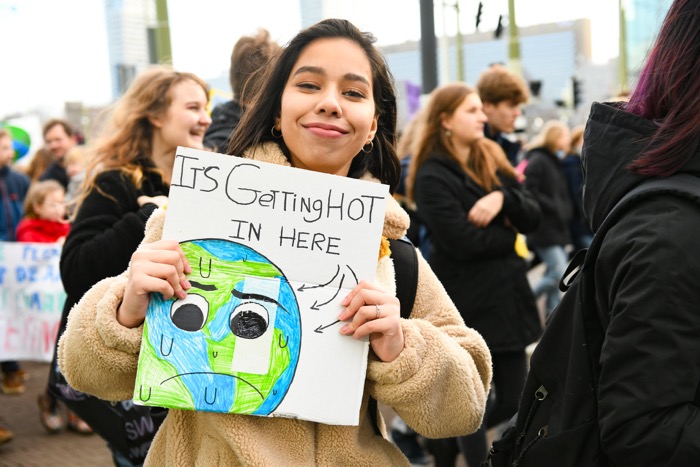
Should journalists embrace or shun activism? At this year’s DW Global Media Forum, media experts warn not to blur the lines between value-driven journalism and activism.
Journalism and activism are separate realms that ought to be kept separate, was the consensus view point expressed by panelist’s media experts from around the world, taking part in the two-day panel session at the 2022 Global Media Forum, discussing the future of journalism in a time of wars, crises and catastrophes.
At the same time, they cautioned that we should acknowledge that journalists cannot adopt a “view from nowhere” — all journalists are guided by values, selecting certain stories over others, deeming some more relevant and news-worthy than others.
Where does this leave journalists? Should they take sides and tell audiences what to do and think? Should they, in other words, become activists? They certainly should not, DW Director General Peter Limbourg, one of the panelists, said.
Not even, he added, when covering pressing challenges like global warming. Journalists should never abandon their critical mindset and side with activists. Otherwise, he warned, they risk straying from “the path of journalism.”
“Journalism is complicated,” Limbourg said. “We have to show the full picture; and that means it is complicated.” Oversimplifying should best be left to politicians or populists, according to Limbourg. And to activists championing a cause, one might want to add, as their agenda is to agitate rather than inform.
Patricia Toledo de Campos Mello, an investigative reporter at Brazilian Folha de Sao Paulo daily, similarly warned journalists that they should avoid cherry-picking sources to corroborate their own narrative.
Kiundu Waweru, a journalist with the Internews Earth Journalism Network, said reporters who specialize on and heavily cover certain topics may be perceived as partisan.
He admitted “it’s a really thin line between being a journalist and an activist.” To stay clear of this pitfall and maintain one’s journalistic integrity, he said, reporters should avoid only interviewing and citing sources that confirm their own perspective.
A healthy skepticism, openness towards an interest in the messy ambivalence of life therefore seem characteristic of quality journalism.
Even though panel host Philip Gayle contends we may have entered an “anti-nuance” era, professional journalists will continue reporting on the world in all its perplexing and puzzling ambiguity. That, after all, is what sets them apart from activists.
