



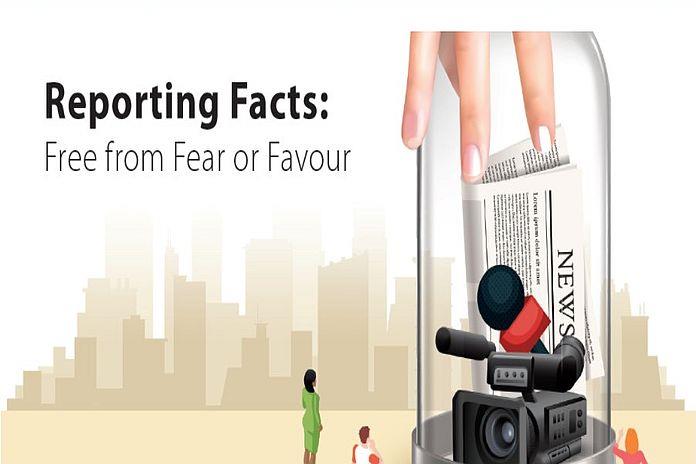
Independent journalism is in peril, faced with the erosion of business models, increasing crackdowns on press freedom, and ongoing threats against the safety of journalists. The global community must act swiftly to protect and promote press freedom and public access to free, independent, and pluralistic news media. In order to effectively respond to these urgent challenges, we must first understand them.
The World Trends in Freedom of Expression and Media Development series analyses trends in media freedom, pluralism, independence, and the safety of journalists. The Global Report, published every four years since 2014.
It provides a macro-level perspective that informs UNESCO Member States, international organizations, civil society groups, academia, and individuals seeking to understand the changing global media landscape. Issue briefs and other publications in the World Trends Report series offer additional insights into new and evolving challenges in the field of freedom of expression and media development.
The findings are grounded in the analysis of 160 data sources, conducted by UNESCO in partnership with the Data-Pop Alliance, covering trends in media freedom, pluralism, independence, and the safety of journalists, and supplemented by original research by Economist Impact commissioned for this Report.
From 2016 to the end of 2021, UNESCO recorded the killings of 455 journalists, who either died for their work or while on the job. At the same time, imprisonment of journalists has reached record highs.
Press freedoms worldwide have declined measurably since 2012. Over the past five years, approximately 85 percent of the world’s population experienced a decline in press freedom in their country.
Since 2016, dozens of countries have adopted or amended laws and regulations which threaten freedom of expression and press freedom online.
The global pandemic highlighted the urgent need for trustworthy news and information. Yet COVID-19 measures were used to justify significant violations of press freedom—in 96 out of 144 countries, according to one study by the Varieties of Democracy Institute.
Additionally, according to UNESCO data, at least 160 countries still have criminal defamation laws on the books. At least 57 laws and regulations across 44 countries have been adopted or amended since 2016 that contain overly vague language or disproportionate punishments that threaten online freedom of expression and press freedom.
Growing numbers of media outlets have been forced to cut down on staff or close their doors permanently. Just two companies, Google and Meta, now receive approximately half of all global digital advertising spending.
Yet, in the countries and communities where journalism is most at risk, the health of the news system often remains a black box.
