



Hundreds of financial organizations that wanted to protect themselves against the sanctions on Russia have made thousands of queries recently, using the software a Financial Technology company located in Istanbul developed.
Faced with an unprecedented level of sanctions on Russia, global banks are taking a dim view of business with all Russian entities and dropping clients if there is even a slight doubt on their ties to that country, said bankers and lawyers.
The sanctions on Russia are the most powerful and costly punishments imposed on a major economy at least since the Cold War. Their speed, breadth and coordinated global support appear unprecedented.
Not surprisingly, the impact is immediately visible. The damage to the Russian economy and financial system includes, but is not limited to, a plunge of the ruble (by about 40 percent versus the dollar over the past month amid heightened volatility); runs on domestic banks; a sharp hike in the central bank’s policy rate; imposition of capital controls; shutdown of the Russian stock market; collapse in the value of Russian companies traded on foreign stock exchanges; removal of Russian equities from global indexes; and the collapse of Russia’s sovereign credit rating to junk status.
Banks and Financial Institutions put Sanction Scanner on their agenda. This startup works with financial institutions from over 40 countries with more than 3000 up-to-date Sanctions, PEP and Watched lists.
Many countries imposed unprecedented sanctions on Russia following the military action taken by Russia to invade Ukraine on 24th February. The financial institutions that saw the news don’t want to trade with Russian companies and companies that have relations with Russia by any means.
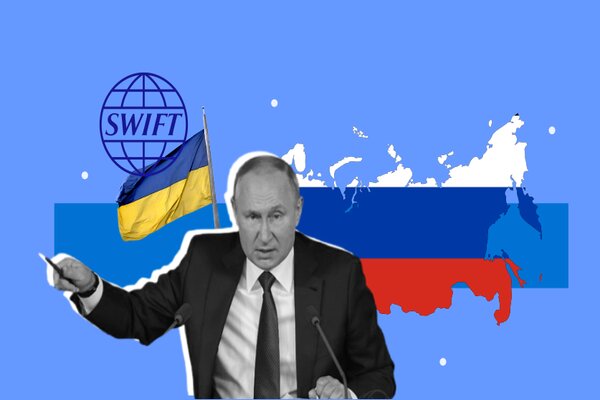
The United States, The United Kingdom, The EU, Canada, Singapore, Japan, South Korea, Taiwan, Australia, and New Zealand imposed sanctions on Russia following the start of the Russo-Ukrainian war. The sanctions mainly focus on excluding Russian banks from SWIFT and actions against Russian oligarchs, the subsidiaries of big Russian banks, government entities, and other sanctions covering different areas.
Financial institutions, especially multinational banks, are experienced with sanctions, and they spent billions of dollars on AML Compliance past few years. However, sanctions being unprecedented, fast, and big make the situation complicated for every organization in the market.
According to Fatih Coskun from Sanction Scanner LTD, the banks are careful trading with Russian companies following the sanctions on Russia. The concerns are escalating as the banks question whether they can keep up with the sanctions or have a powerful tool to point out risky transactions. The main concern is new sanctions keep escalating.
Sanction Scanner always follows the Russia-Ukraine crisis takes the job seriously from the very first day. Sanction Scanner data analysts deliver the changes to companies with a 100% accuracy rate as soon as possible to keep clients safe against the sanctions. In this way, Sanction Scanner customers can take quick measures against sanctions and perform their controls, protecting themselves and their companies from high penalties.
Swift and sanctions against Russia
Banks and financial institutions created teams to follow the sanctions on Russia. However, the fast-pacing news makes it hard for companies to follow the sanctions. According to experts, the speed of sanctions on Russia and their stance against laws creates problems companies should deal with.
Many Russian banks are excluded from SWIFT even though Russia is not excluded from SWIFT yet. All Russian banks being excluded from SWIFT would affect both Russia and European countries that depend on the energy sources coming from Russia. Being excluded from SWIFT means not being able to export for Russia. As a result, it would leave Russia alone in global trading.
Executives at U.S. banks indicate that they expect to face little risk for major disruptions as a result of international sanctions levied against Russia in the wake of its invasion of Ukraine. The reason is that they have pulled back from Russia in recent years. According to the Bank for International Settlements (BIS), as of the third quarter of 2021, lenders in the U.S. collectively had claims against Russia that totaled only $14.7 billion.1
However, European banks—especially those located in Austria, Italy, and France—are the lending institutions with the largest exposures to Russia. As a result, they already have been concerned for weeks about the potential impact from governmental sanctions that might follow a Russian invasion.
Banks are on alert
Major buyers of Russian oil had to obtain letters of credit from Western banks due to market uncertainty even before the western alliance announced their sanctions on Russia.
According to released data, American banks are at risk of 14,7 Billion United States Dollars. The risk of Italian, French, and Australian banks is stated as 45,5 Billion United States Dollars in total. Citi announced their risk is at 10 Billion United States Dollars now, and Goldman Sachs stated their risk as 293 million United States Dollars since December 2021 and 414 Million USD in total.
Financial situations realized how important AML Compliance is once again. It is essential to have the latest technology that keeps up with sudden changing sanctions and data. Sanction Scanner follows the latest sanctions and updates its system to keep its clients informed and safe.

2 Comments
I have read so many posts about the blogger lovers however this post is really a good piece of writing, keep it up
whoah this blog is wonderful i really like reading your articles. Keep up the great paintings! You realize, a lot of people are hunting round for this info, you could help them greatly.