



As the annual UN Climate Change summit begins in earnest, members of Egyptian civil society known as the Egyptian Human Rights Coalition on COP27 are calling for November 10 to be an international day of solidarity with political prisoners of the Sisi government.
Matthew Hale, Senior Program Officer with Freedom House’s Emergency Assistance Programms, explains how environmental rights defenders are at the forefront of democratic activism, the dangers they face, and the problem of hosting one of the world’s foremost environmental forums in a country that persecutes them.
Historically, environmental rights defenders have often been the front end of the wedge in criticizing authoritarian governments. An example that comes to mind is in the Baltic states, where the environmental movement was a key change actor during the fall of the Soviet Union.
In many countries where the civic space is under attack, a direct call for democratic reform would be too confrontational for the authorities to tolerate, whereas criticism of environmental disasters has a level of organic popular support and credibility because it so directly impacts ordinary citizens’ lives.
When people’s children are dying from drinking polluted water, or subsistence farmers find their lands turning barren, those are very difficult criticisms for government to suppress or dismiss.
There are many misconceptions and under-told stories about environmental and climate activists as democratic actors. Stories of teenagers throwing soup at a Van Gogh painting earn clicks and shares, but painstaking, decades-long work to hold local officials accountable on land, environment, and climate issues isn’t often reported—even though these activists, particularly Indigenous people, face disproportionate risk for their work.
Of the 54 land and environmental defenders killed last year in Mexico, 40 percent were Indigenous.
“I think the hosting of COP27 in Egypt—which is deeply problematic, but I’ll get to that—is an important moment for the democracy and human rights community to reflect on the important role land and environmental defenders play in this field. Climate change will have an enormously destabilizing effect on democracy, driven by food insecurity and more extreme weather events, which in turn will lead to conflict and record levels of migration”, observed Matthew Hale
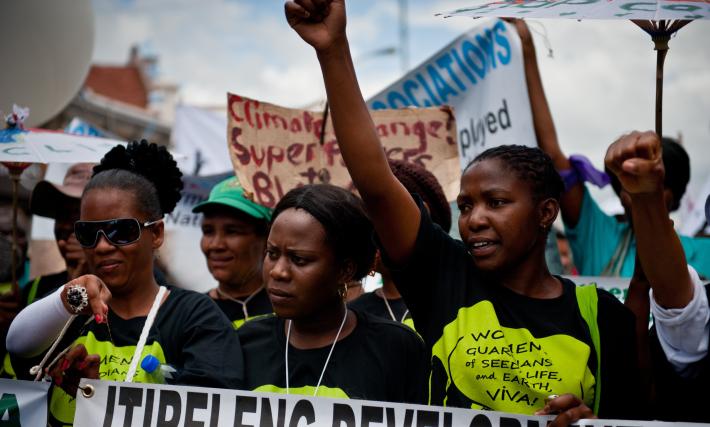
Most of the people fighting on the front lines against environmental and climate degradation aren’t on the cover of TIME magazine or giving press conferences on the sidelines of the UN General Assembly. They’re farmers, community leaders, grandmothers, just trying to protect their homes, families, and livelihoods.
The coalition is tremendously diverse. There are also now multiple generations of younger activists, particularly in low-lying lands across the global south, who are already experiencing the tangible reality of climate change in their day-to-day lives.
The people defending environmental, climate, land, and Indigenous rights are one of the most at-risk groups in the activist space. Three people are killed every week trying to protect their land from extractive forces.
In terms of the specific threats they face, there’s a pretty consistent set of tactics that authoritarians use to put down civic activity: militarized response to protests, death threats, assassination. There’s also digital repression now, namely, using social media and astroturfing accounts to smear environmental organizations as anti-economy or anti-development, or implying they’re foreign agents.
One of the most-used tools by governments for stymying activists is the SLALPP, which stands for “strategic lawsuit against public participation.” This is when regimes keep civic organizations tied up in endless lawsuits based on trumped-up charges, usually with the assistance of politicized courts, with the aim of wearing the activists down—their morale or their bank accounts, or both.
Land, environmental, Indigenous, and climate rights defenders also face threats from corruption within extractive industries. Last week, a UK subsidiary of the mining giant Glencore was ordered to pay more than £275 million (roughly $315 million) for bribing officials in African countries to gain access to oil, and investigative reporting previously uncovered efforts by a Canadian mining company to sway elections in the Democratic Republic of Congo.
We’re also seeing robust efforts by Beijing to strengthen its influence in countries where Chinese resource-extraction companies operate. In autocratic countries—especially countries that are run by a military junta, such as Thailand, Myanmar, or Cambodia—the authorities are deeply connected to extractive industries like mining companies. So they have a vested interest in keeping environmental activism to a minimum.
