



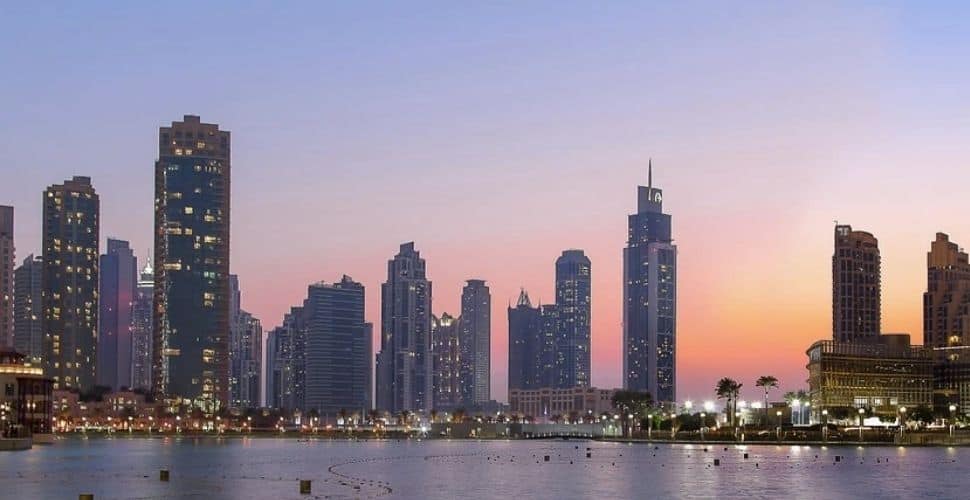
Since opening in October 2021, the Expo show hosted in Dubai in the United Arab Emirates (UAE) is expected to attract tens of millions of visitors through to March 2022. What visitors may not be aware of however is that behind the entertainment, migrant workers allege being subjected to conditions amounting to forced labor.
Celebrities, social media influencers and corporate sponsors have endorsed the Expo show, part festival part experience, presenting the latest innovations in technology and the “next wave of human brilliance”. Yet, the reality for migrant workers working behind the scenes is a far cry from the forward-thinking innovations espoused by the event.
Migrant workers allege having to pay illegal recruitment fees for their jobs, having their passports confiscated and wages withheld by employers. One worker told the Guardian, “They promised me an increment in salary after probation – something I have not seen to date … Never have I received overtime payment from my employer … The way they treat the staff is like slaves, I mean modern-day slavery.”
In a new report by international human rights and labor charity, Equidem, migrant workers shared their experiences of obtaining work in the UAE with over half interviewed reporting having to pay recruitment fees in their country of origin.
A further two-thirds said their wages were not paid on time. Due to withholding of wages, workers also describe being unable to send money to their families or buy food.
90% of UAE’s workforce have migrated from India and Africa. Workers interviewed by Equidem also reported facing racist abuse and discrimination, further contributing to an environment where the undermining of migrant workers’ rights are normalized.
And the UAE is not the only Gulf state under pressure to improve migrant workers’ conditions. Ahead of the 2022 World Cup, all eyes are on Qatar to finally abolish the exploitative kafala system and ensure reliable mechanisms are in place to protect migrant workers from exploitation and forced labor.
90% of UAE’s workforce have migrated from India and Africa. Workers interviewed by Equidem also reported facing racist abuse and discrimination, further contributing to an environment where the undermining of migrant workers’ rights are normalized.
And the UAE is not the only Gulf state under pressure to improve migrant workers’ conditions. Ahead of the 2022 World Cup, all eyes are on Qatar to finally abolish the exploitative kafala system and ensure reliable mechanisms are in place to protect migrant workers from exploitation and forced labor.
Right now we have an opportunity to help. The Ministry of Labor made promises to make substantial reforms to the kafala system, ensuring the protection of migrant workers. Last year, we were pleased to see that the Qatari government had introduced new laws to reform the kafala system.
These reforms allow employees to leave undesirable jobs and freely seek employment elsewhere to avoid exploitation, receive better monthly minimum wage and working conditions.
But, several months later, full implementation is still lacking. Activists and lawyers working on the ground say that a lack of sufficient resources and the sheer volume of cases is the real cause of the lag for the new law.
When the 2022 World Cup is over, there will be less eyes on Qatar and less urgency for the Qatar government to implement these crucial reforms, protect workers rights and freedom. Freedom United calls for global action calling the Qatari authorities to deliver on the critical reforms they promised and end forced labor. Help improve the working conditions of hundreds of thousands of migrant workers in Qatar.
