



The wholesale price-based inflation eased to a 29-month low of 1.34 per cent in March on easing prices of manufactured products and fuel items, even though food articles turned expensive.
March is the 10th straight month when wholesale price index (WPI) based inflation has declined. The inflation was 3.85 per cent in February and 14.63 per cent in March 2022.
“Decline in the rate of inflation in March 2023 is primarily contributed by fall in prices of basic metals, food products, textiles, non-food articles, minerals, rubber and plastic products, crude petroleum and natural gas and paper and paper products,” the commerce and industry ministry said on Monday.
The headline WPI inflation for March eased to its lowest level since October 2020, when the rate of price rise was 1.31 per cent. Last month, inflation in food articles rose to 5.48 per cent as against 3.81 per cent in February.
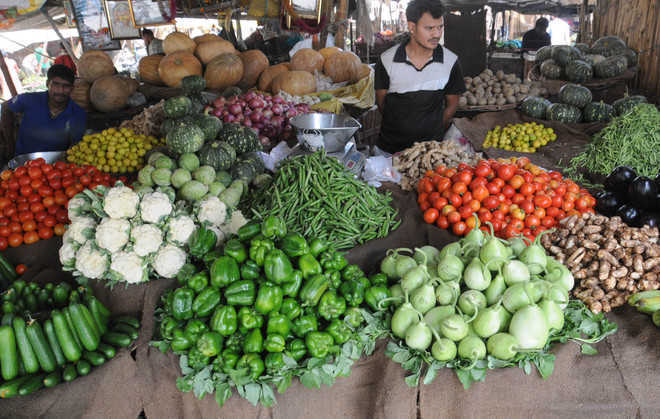
Among food items, although inflation in vegetables, onion and potato remained in negative, the rate of price rise was higher than that in February. In case of vegetables, it was at (-)2.22 per cent in March, higher than (-)21.53 per cent in February. In onion, inflation was (-)36.83 per cent in March, higher than (-)40.14 per cent in the previous month.
Inflation in wheat and pulses was 9.16 per cent and 3.03 per cent, respectively, while in oilseeds it was (-)15.05 per cent in March 2023. Equirus Securities in a note said within food items category, cereals especially wheat is softening while other items like vegetables, fruits, milk and pulses are rising which is creating a discomfort for a broad-based food disinflation within the CPI index.
As per the government data, fuel and power basket inflation eased to 8.96 per cent in March from 14.82 per cent in February. In manufactured products, inflation was (-)0.77 per cent as against 1.94 per cent. The deceleration in WPI comes in line with the easing of March retail inflation.
