



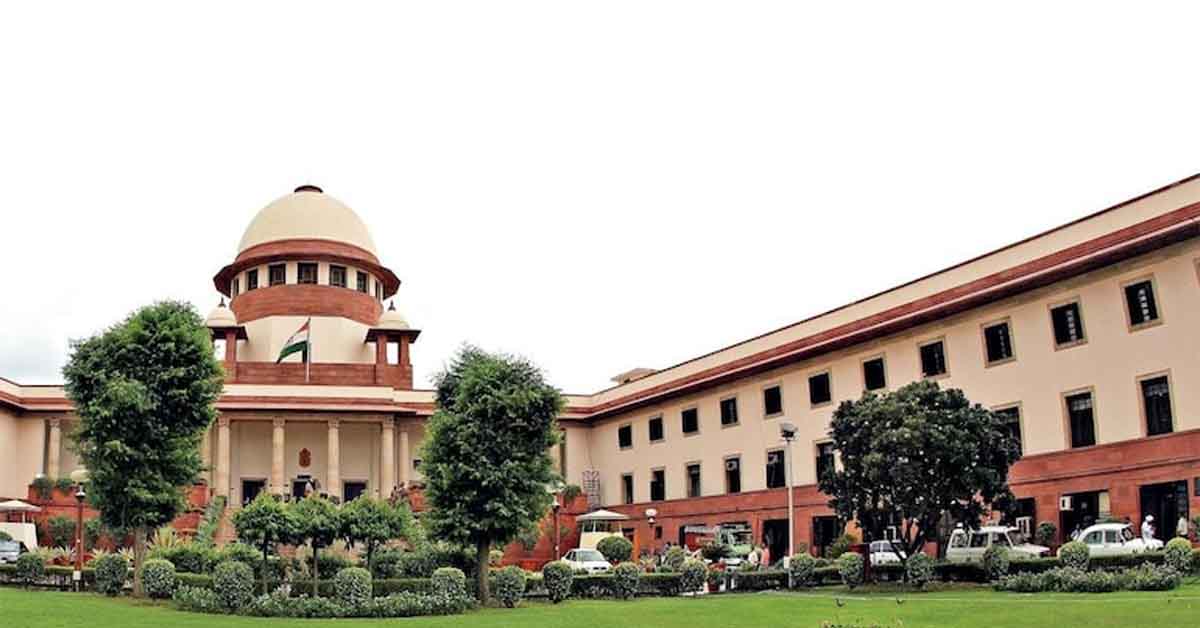
The Supreme Court has upheld the 103rd Constitutional Amendment that introduced a 10% reservation for Economically Weaker Sections (EWS) in education and public employment.
Three out of the five-judge bench, led by CJI U U Lalit, upheld the amendment, stating that its provisions do not violate the constitution.
While justices Dinesh Maheshwari, Bela Trivedi and B. Pardiwala upheld the amendment, CJI Lalit and Justice Ravindra Bhat dissented and wanted the constitutional amendment on the EWS quota struck down.
As per the majority view of Justices Maheshwari, Trivedi and Pardiwala, reservation structured singularly on economic criteria does not violate the basic structure of the Constitution. They also held that the breach of the 50% ceiling limit by EWS reservation isn’t a violation either.
“Reservation is an instrument of affirmative action by the state so as to ensure an all-inclusive approach. It is an instrument not only for the inclusion of socially and educationally backward classes. Reservations for EWS do not violate basic structure on account of 50% ceiling limit because ceiling limit is not inflexible,” Live Law quoted the majority judgment.
Justice Trivedi said that the state has come out with the amendment for the advancement of EWS categories. She observed that the amendment creates a separate class of EWS.
“The exclusion of SEBCs cannot be said as discriminatory or violative of Constitution,” she added. Justices Trivedi and Pardiwala wanted a deadline for reservations.
Meanwhile, in their dissenting judgment, both Justice Lalit and Bhat observed that the 103rd Amendment practices discrimination by excluding the poor among SC/ST/OBC from economically backward classes (on the ground that they have enjoyed benefits).
The duo also opined that breaching the 50% ceiling in matters of reservation would result in compartmentalisation.
