



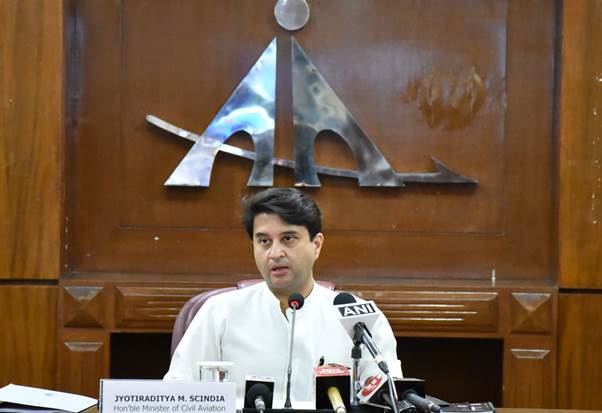
Minister of Civil Aviation Jyotiraditya M. Scindia launched National Air Sport Policy 2022 (NASP 2022). NASP 2022 lays out the vision of making India as one of the top sports nations by 2030, by providing a safe, affordable, accessible, enjoyable and sustainable air sports ecosystem in India.
Air sports, as the names suggests, encompasses various sports activities involving the medium of air. These include sports like air-racing, aerobatics, aero modeling, hang gliding, paragliding, para motoring and skydiving etc. India has the potential to be among the leading nations in the world of air sports.
It has a large geographical expanse, diverse topography, and fair-weather conditions. It has a large population, especially the youth. It has a growing culture for adventure sports and aviation. The NASP 2022, is a step in this direction. It has been drafted based on the inputs received from policy makers, air sports practitioners and public at large and will ensure establishment of good quality of infrastructure, equipment, instructors and services.
Scindia said, “We want to create an environment of adventure, thrill and sports in the country. For this, we will leverage the energy of our youth below the age of 35 which accounts for 70 percent of India’s population which is larger than the total population of Europe and three times that of USA”.
He said that India has a huge geographical expanse, extending from the Himalayas and the mountainous regions to our states in the northeast to the plains in central India to the coastal regions on the western-eastern coastline, and therefore you have the ability in this country to have the widest diversity of air sports.
Speaking on the future of Air Sports in India, he said “From a small market size of around 5,000 odd air sports practitioners creating around Rs 80-100 crore of annual revenue in India, I feel we can target over Rs 8,000 – 10,000 crore annual revenue and generate over 1,00,000 direct jobs. The economic multiplier benefits in terms of travel, tourism, support services and local infrastructure development will be over three times.”
