



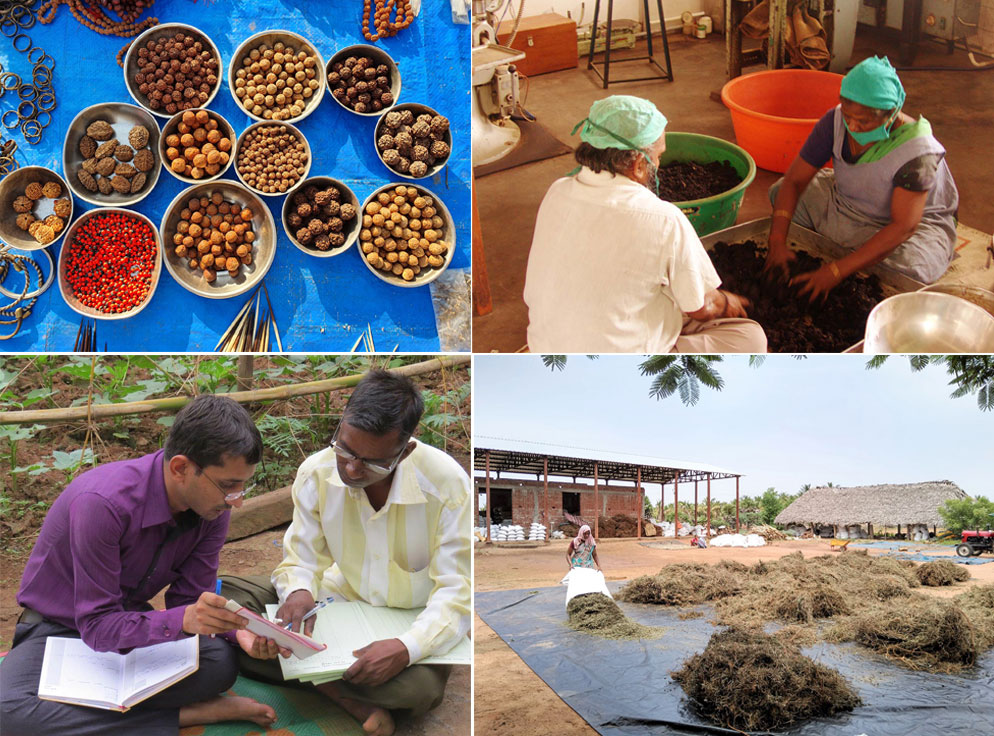
Notwithstanding the alacrity that the country has shown in ratifying and supporting international biodiversity conventions or in enacting domestic laws and regulations, India’s record in conservation and use of its bioresources has been quite dismal – finds an investigative analysis done by Down To Earth (DTE) magazine.
Thirty years ago, in 1992, the world had agreed on a landmark global treaty: the Convention on Biological Diversity. Says Sunita Narain, editor of DTE and director general of Centre for Science and Environment (CSE), which helps publish the magazine:
“What became clear very soon is that the conservation of bioresources, and particularly their utilisation, require active involvement of local communities. These communities need to be active partners and also share the profits of the use of their resources and knowledge.”
In 2010, as a result, came the Nagoya Protocol, designed as an instrument for fair and equitable sharing of benefits with communities.
India has been quick to act in terms of ratification of the Convention and the Protocol.
In 2002, the country adopted the Biological Diversity Act and set up an elaborate institutional framework to protect bioresources and to share benefits with knowledge-holders.
The National Biodiversity Authority was established; each state now has its own biodiversity board, and each village its biodiversity management committee (BMC). The BMCs are required to prepare the People’s Biodiversity Registers, and have powers to impose charges and fines for extraction of resources found in their villages.
“But,” says Narain, “our analysis, based on field visits and conversations with experts, finds that the entire effort to share benefits with communities has been reduced to, at best, a meaningless bureaucratic exercise and at worst, a charade.”
Says Vibha Varshney, associate editor, DTE and the lead writer of the analysis: “The system of access and benefit sharing can work only if the traditional knowledge holders are recognised; if the traders and manufacturing companies that use their knowledge are held liable for payments; and if this payment is then transferred to the community or traditional-knowledge holder.”
Narain points out that it is important at this stage to review the recently introduced amendments to the National Biodiversity Act, which are currently being discussed by the joint committee of the Parliament.
She says: “We believe these amendments do not address the substantive issues that would fix the current problems that we have outlined in our analysis. What is needed is to strengthen the accountability of the state boards; to share benefits with communities; and to undertake conservation of bioresources. There is little to suggest that these will be done.”
