



The International Monetary Fund (IMF) has welcomed Union Budget 2022-23, presented by finance minister Nirmala Sitaraman in the Parliament on Febravary 1, terming it as a “thoughtful policy agenda” for India.
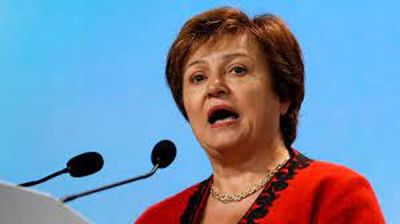
IMF Managind Director Kristalina Georgieva observed that this being conditioned on a number of factors, including that in the COVID-19 pandemic they continue to function better and should the pandemic continue to be around, and that the tightening of financial conditions would be done with clear forward guidance and in a prudent manner, not creating any more significant shock.
She welcomed that the Budget puts a great deal of emphasis on innovation in research and development on human capital investment and digitalization.
“We have been projecting a quite robust growth for India. Yes, there is a small downgrade versus our previous projection from 9.5 per cent to 9 per cent for 2022. But then we also have a small upgrade for 2023, because we think that we will see a stable growth not very different from (those projected by) the (Union) Minister of Finance,” she added.
However, she said that the tightening of financial conditions is not translating into a big problem for emerging markets. “In comparison to previous periods, the impact on rates is not at all significant. Because emerging markets have worked to build buffers and strength for situations like this and because many of them themselves have taken prudent actions once they faced inflationary pressures,” she said.
“We are very positive on the fact that India is thinking of addressing short-term issues, but also long-term structural transformation” she added.
Finance Minister Sitharaman unveiled a Rs 39.45 lakh crore Budget with higher spending on highways to affordable housing with a view to fire up the key engines of the economy to sustain a world-beating recovery from the pandemic. In the budget, she gave stress on spending on infrastructure to create jobs and boost economic activity.
